
Why the People Behind Fitness Talent Made More Than the Talent
Joe Weider built his first barbell from car wheels and axles. He sold his publishing empire for $357 million. Arnold Schwarzenegger, the man Weider discovered, is worth $1.1 billion. But Arnold is one data point. The dozens of other Mr. Olympia winners Weider platformed are worth a fraction of that. Weider profited from all of them. They profited from Weider only if they transcended him. In the fitness industry, the kingmaker always gets paid. The talent gets paid only if it escapes.
There’s a recurring delusion in the fitness industry: the person doing the pushups is the one making the money. They’re not. The person selling the mat, filming the pushup, distributing the video, and collecting the subscription fee is making the money. The person doing the pushup is making content.
This distinction, between talent and infrastructure, between performer and platform, has defined wealth creation in fitness for eight decades. And the pattern is brutally consistent. The people who built the stages always outearned the people who performed on them.
Joe Weider: The $7 Barbell to the $357 Million Exit
Joe Weider was born in Montreal in 1919 to Polish-Jewish immigrants. He left school at twelve to pull a wagon delivering groceries. He weighed 115 pounds. Older kids robbed him. When the local YMHA wrestling coach rejected him for being too small, Weider went to a newsstand, bought two used fitness magazines for a penny, and built a barbell from automobile wheels and axles in his family’s garage on Coloniale Street.
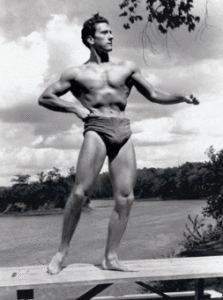
With seven dollars in his pocket, he published the first issue of “Your Physique” magazine in 1940. Within eighteen months, he’d made a $10,000 profit, a small fortune when bread cost four cents.
What happened over the next six decades is a masterclass in platform economics, executed before the word “platform” meant anything beyond a raised surface you stand on.
The Self-Feeding Machine
Weider didn’t build a business. He built an ecosystem. Each piece fed the others, and he owned every piece.
The magazines, eventually including Muscle & Fitness, Flex, Shape, Men’s Fitness, and Fit Pregnancy, needed cover models. The Mr. Olympia competition, which he created in 1965, needed competitors. Weider Nutrition, considered the first sports nutrition company when the family founded it in 1936, needed endorsers. The endorsers needed magazine exposure to grow their profiles. The magazine exposure drove competition attendance. The competition attendance drove supplement sales.
Every bodybuilder who entered this ecosystem made money for Joe Weider. Joe Weider didn’t necessarily make money for every bodybuilder. The distinction is everything.
The Arnold Exception and the Rule It Proves
In 1968, Weider brought a twenty-one-year-old Austrian bodybuilder named Arnold Schwarzenegger to California. He paid for Arnold’s relocation. He got Arnold his first movie role in “Hercules in New York” by describing the incoherent, barely English-speaking teenager to producers as “the greatest Shakespearean actor of his generation.” Arnold wrote articles for Muscle Builder. His physique appeared on supplement labels. He won Mr. Olympia seven times between 1970 and 1980.
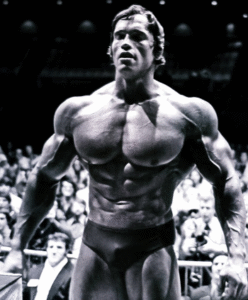
Schwarzenegger is now worth approximately $1.1 billion, according to Forbes. That figure includes his acting career, real estate empire, and business ventures. It vastly exceeds what Weider accumulated.
But Arnold is the exception that proves the rule. Consider every other Mr. Olympia winner from the same era: Sergio Oliva, Franco Columbu, Frank Zane, Chris Dickerson, Samir Bannout. All champions. None billionaires. None even close. They made Weider money through magazine sales, competition fees, and supplement endorsements. Weider’s system extracted value from every one of them equally. The system didn’t require any of them to become Arnold. It just needed bodies on the covers and competitors on the stage.
When Weider sold his publishing empire to American Media in 2003, the price was $357 million. His net worth at death in 2013 was estimated at $35 million. But the cumulative value he extracted from the ecosystem over seven decades, through magazines, competitions, supplements, equipment sales, and the Weider Training Principles that he codified from observing athletes in gyms, dwarfed what any individual athlete earned inside his system.
The Mentor Who Didn’t Own the System
The contrast with Reg Park is instructive. Park was a three-time Mr. Universe winner from Leeds, England. He starred in five Italian Hercules films. He was Arnold Schwarzenegger’s original inspiration, the man whose physique in a magazine made a fifteen-year-old Austrian boy decide to become a bodybuilder. Arnold has called Park “the blueprint for my life.”
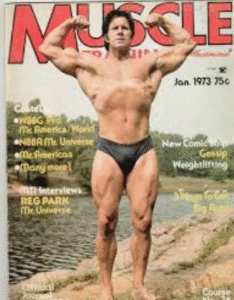
Park mentored Schwarzenegger personally, traveling with him to competitions, handing him the microphone at events, teaching him to address crowds. In the documentary “Pumping Iron,” Park appears mentoring Arnold directly.
Reg Park’s estimated net worth, adjusted for inflation, was approximately $6 million. He owned gyms in South Africa. He trained clients at the Morningside Virgin Active Gym in Sandton until his death from skin cancer in 2007 at age seventy-nine.
Park was the mentor. Weider was the system. Park created the inspiration. Weider created the infrastructure that monetized it. Park’s son Jon Jon now runs a gym called Legacy in West Los Angeles. Weider’s legacy is a $357 million publishing sale, an international federation spanning 170 countries, and the most prestigious bodybuilding competition on Earth.
Mentors inspire. Platforms compound. The difference in financial outcome between the two is not a matter of talent or even of importance. It’s a matter of structure. Park invested in one person. Weider invested in a system that profited from every person who entered it.
Beachbody: The Modern Platform That Ate Its Talent
If Joe Weider built the prototype of fitness platform economics, Beachbody built the industrial-scale version.
Carl Daikeler and Jon Congdon founded the company in 1998 in Santa Monica with $500,000 in angel investing. Daikeler had previously created 8-Minute Abs. The founders bought the domain Beachbody.com and began developing workout videos. By 2021, Beachbody was valued at $2.9 billion in a three-way merger with Forest Road Acquisition Corp and Myx Fitness Holdings. Over its history, the company has generated more than $12 billion in cumulative sales and served 32 million customers.
The trainers who created this value? They did fine. But “fine” and “$12 billion” exist on different planets.
Tony Horton: The Face Worth $20 Million Attached to a $12 Billion Platform
Tony Horton was a former mime who moved to Los Angeles in 1980 to become an actor. He performed on the Santa Monica pier with a hat in hand for food money. He worked out at the World Gym in Venice alongside Arnold Schwarzenegger and Lou Ferrigno. Eventually he became a personal trainer, building a client list that included Billy Idol, Tom Petty, Bruce Springsteen, Sean Connery, and Antonio Banderas.
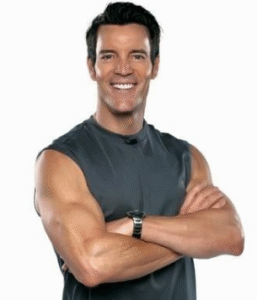
In 2001, Beachbody approached Horton to create an in-home fitness program. The result was Power 90, followed in 2005 by P90X, perhaps the single most financially successful workout program in history. P90X sold over four million copies on DVD alone. The total franchise, including P90X2, P90X3, and related products, generated over $700 million in sales. Some estimates put the figure above $500 million just for the core programs.
Tony Horton’s estimated net worth: $20 million.
Beachbody’s cumulative revenue: $12 billion.
Think about those two numbers together. Horton created the content that put Beachbody on the map. P90X was the product that transformed the company from an infomercial operation into a fitness empire. CEO Carl Daikeler told Horton to “just be yourself,” and that authenticity, the humor, the community feel of having mic’d-up training partners who struggled alongside you, became the formula that redefined home fitness.
Yet after twenty years, Horton left. Contract negotiation issues. The company going in a direction he didn’t want. “Kind of like Tom Brady,” he said in a podcast interview, “it’s like time to go.” He now runs PowerNation Fitness, his own platform, and Powerlife, his supplement line. “I never could have had a supplement line with Beachbody,” he noted. The platform that made him famous also limited what he could build independently.
Shaun T: $10 Million and the Hardest Workout on DVD
Shaun T, born Shaun Thompson in Camden, New Jersey, graduated from Rowan University with a degree in Sports Science and a minor in Theater and Dance. He worked at a pharmaceutical company before moving to Los Angeles, where he danced for Mariah Carey and worked as a choreographer. While training at Equinox, he was invited to submit a workout video to Beachbody.
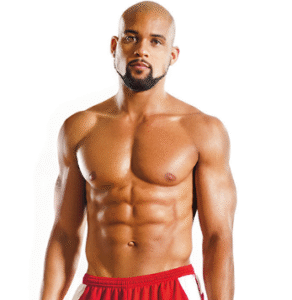
His 2009 program Insanity became the hardest workout ever distributed on DVD. The sixty-day high-intensity program required no equipment and promised extreme results. It worked. The program became a global phenomenon, downloaded over a million times in its first week on Beachbody On Demand.
Shaun T’s estimated net worth: $10 million.
Between Horton and Shaun T, two trainers created the two most iconic programs in Beachbody’s history. P90X and Insanity are the reason most people have heard of the company. Combined, these two men are worth approximately $30 million. The platform they built is a public company that peaked at a $2.9 billion valuation and has generated $12 billion in cumulative revenue.
The talent captured roughly 0.25% of the value it created. The platform captured the rest.
The Shakeology Multiplier
The financial asymmetry becomes even more extreme when you factor in Shakeology, Beachbody’s premium supplement shake. Shakeology alone has generated over $3 billion in cumulative sales and more than a billion servings. Neither Horton nor Shaun T created Shakeology. But their programs drove the customer base that bought it. P90X users became Shakeology customers. Insanity users became Shakeology subscribers. The trainers created the relationship. The platform monetized the relationship across multiple product lines the trainers never touched.
This is the kingmaker’s cut in its purest form. The talent creates the emotional connection. The platform converts that connection into recurring revenue across every available surface: subscriptions, supplements, merchandise, coaching fees, and eventually retail distribution in grocery stores and mass merchants.
Joe Rogan: The Podcast as Kingmaker Platform
Joe Weider used magazines and competitions. Beachbody used infomercials and DVDs. Joe Rogan uses a microphone and a three-hour conversation.
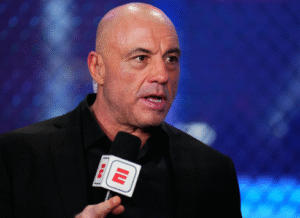
The mechanism is different. The economics are identical.
Andrew Huberman’s mainstream breakthrough came after his Rogan appearance. Peter Attia’s book sales spiked after Rogan. Casey and Calley Means reached millions through Rogan before their political appointments. The pattern repeats across every health and fitness guest: appearing on Rogan generates an audience surge that no other single media appearance can match.
But Rogan doesn’t share in the book sales, supplement revenue, or course enrollments his guests subsequently enjoy. He doesn’t need to. His value isn’t in capturing downstream revenue from any individual guest. It’s in being the platform that every guest needs to pass through. The guests capture attention. Rogan captures the ability to grant attention. And the ability to grant attention, in a fragmented media landscape where getting noticed is the hardest part of building a fitness brand, is worth more than any single brand built on his platform.
The Weider-to-Rogan Pipeline
The structural parallel between Weider and Rogan is precise. Weider’s magazines needed cover models. The models needed magazine exposure. Neither could exist without the other, but Weider owned the system and the models were replaceable inputs. If one bodybuilder declined a cover shoot, another was waiting. The magazine continued regardless.
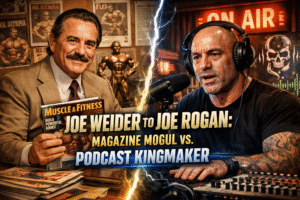
Rogan’s podcast needs guests. The guests need Rogan’s audience. If one health expert declines the show, another is available. The podcast continues regardless. The individual guest is valuable but replaceable. The platform is not.
This replaceability asymmetry is the core mechanism of kingmaker economics. The talent pool is always deeper than the platform pool.
There are thousands of qualified fitness experts, but only one Joe Rogan Experience. Hundreds of competitive bodybuilders existed. Only one Muscle & Fitness. The scarcity is on the platform side, which is why the economics tilt toward the platform.
The Taxonomy of Kingmaker Positions
Across eighty years of fitness industry data, kingmaker positions cluster into four types, each with distinct economics:
The Publisher
Joe Weider’s model. Own the media that creates and distributes celebrity. Control who gets featured, how they’re presented, and what products appear alongside their content. The publisher’s revenue comes from advertising, circulation, and the supplement and equipment businesses that the media attention feeds. The talent’s revenue comes from the exposure the publisher grants, which the publisher can revoke at any time.
Modern equivalents: fitness media companies, YouTube channels that feature rotating trainers, podcast networks that platform health experts.
The Platform
Beachbody’s model. Create the distribution infrastructure and contractually bind talent to it. The platform produces, markets, and sells the content. The trainer creates the content and provides the personality. The platform captures the customer relationship, the subscription revenue, and the ability to cross-sell products the trainer never created.
Modern equivalents: fitness streaming services, app-based workout platforms, any subscription model that features multiple trainers under one brand.
The Amplifier
Joe Rogan’s model. Don’t create fitness content. Amplify people who do. The amplifier’s value is reach, not expertise. A single appearance can move more product than a year of organic social media. The amplifier doesn’t capture downstream revenue but captures audience loyalty that makes every guest need the amplifier more than the amplifier needs any individual guest.
Modern equivalents: major podcasts, television shows that feature health segments, any media channel where a fitness appearance constitutes a career-defining moment.
The Mentor
Reg Park’s model. Invest deeply in one individual rather than broadly in a system. The mentor creates enormous value for the specific person they mentor but captures almost none of it financially. Park created the blueprint that produced a billionaire. Park’s estimated net worth was $6 million. The return on mentorship is primarily reputational, not financial.
Modern equivalents: personal training relationships that launch careers, coaching relationships that produce celebrity trainers, any one-to-one investment in talent development.
The Math: What Each Position Captures
The financial data across eight decades of fitness industry history tells a consistent story:
Publishers capture the most value over time. Weider’s publishing empire sale of $357 million, plus decades of supplement and equipment revenue, plus the ongoing value of the IFBB and Mr. Olympia, represents the largest cumulative extraction from fitness talent in industry history. The system generated hundreds of millions in profits from bodybuilders who were paid in magazine covers and competition prize money.
Platforms capture the most value at scale. Beachbody’s $12 billion in cumulative revenue, generated primarily through two iconic programs created by trainers worth a combined $30 million, represents a 400-to-1 ratio of platform value to talent value. Even at its reduced current market cap, Beachbody has generated more aggregate wealth than all of its trainers combined, many times over.
Amplifiers capture value through exclusivity. Rogan’s Spotify deal was reportedly worth $250 million. His total net worth is approximately $350 million. This exceeds the net worth of virtually every health and fitness expert who has appeared on his show, with the exception of guests who built their wealth outside of fitness.
Mentors capture the least value. Park’s $6 million adjusted net worth, having mentored the most successful bodybuilder in history, represents the fundamental limitation of the one-to-one model. You can only mentor so many people. You can only capture the gratitude, not the economics, of their subsequent success.
Why Talent Stays Talent
The obvious question: if the kingmaker position is so much more lucrative, why doesn’t every fitness talent become a kingmaker?
The answer is structural. Being talented at fitness, at teaching, at motivating, at demonstrating exercises with charisma, is a fundamentally different skill than building distribution infrastructure. Tony Horton is an exceptional communicator and trainer. Building a platform that reaches 32 million customers requires skills in technology, marketing, finance, supply chain management, and organizational design that have nothing to do with performing a perfect pushup.
Horton understood this. After leaving Beachbody, he launched PowerNation Fitness and his Powerlife supplement line. Both are functioning businesses. Neither is a platform that generates billions. The skills that made him the best home fitness trainer in America didn’t automatically translate to the skills needed to build the next Beachbody.
This is the kingmaker’s structural advantage. The talent pool self-selects for performance skills. The platform pool selects for business skills. The overlap is vanishingly small. Arnold Schwarzenegger is in the overlap. Almost nobody else is.
The Scorecard
Joe Weider: Built first barbell from car wheels at age seventeen. Left school at twelve. Created the International Federation of BodyBuilders, Mr. Olympia, Ms. Olympia, and a magazine empire spanning Muscle & Fitness, Flex, Shape, Men’s Fitness, and Fit Pregnancy. Sold publishing for $357 million. Net worth at death: $35 million. Settled multiple FTC complaints over supplement claims. Described his barely-English-speaking protégé to Hollywood producers as “the greatest Shakespearean actor of his generation.” Nobody called him a liar because the system worked.
Reg Park: Three-time Mr. Universe. Five Hercules films. Mentored the most financially successful bodybuilder in history. Adjusted net worth: $6 million. Trained clients in a Johannesburg gym until his death at seventy-nine. His son runs a gym called Legacy. The name is accurate.
Beachbody (BODi): Founded 1998 with $500,000 in angel investment. Peak valuation: $2.9 billion. Cumulative revenue: $12 billion. Shakeology alone: $3 billion. The company eliminated its MLM model in 2024 and now operates as a direct-to-consumer platform with plans for retail distribution. The trainers who built the brand are worth a combined fraction of what the platform extracted.
Tony Horton: Former mime. Created the most financially successful workout program in history. P90X franchise revenue: $700 million+. Personal net worth: $20 million. Left Beachbody after twenty years over contract issues. “Without them, there’s no way on God’s Earth I’d be where I am,” he said. Then he started his own platform. The departure itself proved the thesis: talent that leaves the platform starts over. The platform continues.
Shaun T: Danced for Mariah Carey before creating the hardest workout on DVD. Insanity downloaded a million times in its first week on-demand. Net worth: $10 million. Still branded as a “Beachbody Super Trainer.” The platform’s label is on him. His label is not on the platform.
The Uncomfortable Truth
In the fitness industry, being the talent is a job. Being the platform that selects talent is an asset. Jobs have salaries. Assets have valuations.
Every generation of fitness professionals rediscovers this truth and is surprised by it. The trainers who created P90X and Insanity are worth roughly what a successful doctor earns over a career. The platform that distributed their work generated more revenue than most Fortune 500 companies in their respective years.
The kingmaker’s cut isn’t a bug in the system. It’s the system’s operating principle. The person who builds the stage always outearns the person who performs on it, unless the performer becomes so famous that they transcend the stage entirely. Schwarzenegger transcended Weider. Tony Horton didn’t transcend Beachbody. The difference isn’t effort or talent. It’s whether you own the infrastructure or rent it.
In fitness, the stage is always worth more than the act.
Frequently Asked Questions
How much did Joe Weider sell his publishing empire for?
Joe Weider sold Weider Publications to American Media in 2003 for $357 million. The sale included Muscle & Fitness, Flex, Shape, Men’s Fitness, Fit Pregnancy, and several other titles. The Weider family had previously founded Weider Nutrition in 1936, considered the first sports nutrition company, and co-founded the International Federation of BodyBuilders in 1946. Weider’s net worth at the time of his death in 2013 was estimated at $35 million.
How much did Tony Horton make from P90X?
Tony Horton’s estimated net worth is $20 million, earned primarily through the P90X franchise and related Beachbody programs over a twenty-year partnership. The P90X franchise generated over $700 million in total sales, with more than four million DVD copies sold. However, as a contracted trainer rather than a platform owner, Horton captured a fraction of the total value his programs generated. He left Beachbody after two decades citing contract negotiation differences and launched his own platform, PowerNation Fitness.
What is Shaun T’s net worth compared to Beachbody?
Shaun T’s estimated net worth is $10 million. Beachbody (now BODi) has generated more than $12 billion in cumulative revenue and peaked at a $2.9 billion valuation in 2021. Shaun T’s program Insanity was one of the two most iconic products in Beachbody’s history, alongside P90X. The combined net worth of Horton ($20 million) and Shaun T ($10 million) represents approximately 0.25% of the total revenue the platform generated.
Was Reg Park wealthier than Joe Weider?
No. Reg Park’s adjusted net worth is estimated at approximately $6 million. Joe Weider’s publishing empire alone sold for $357 million. Park was a three-time Mr. Universe, starred in five Hercules films, and was Arnold Schwarzenegger’s original mentor and inspiration. Weider was the platform operator who created the competitive infrastructure (Mr. Olympia), media infrastructure (Muscle & Fitness), and commercial infrastructure (Weider Nutrition) that monetized bodybuilding talent at scale. Park invested in individuals. Weider invested in systems. The systems produced vastly more wealth.
Continue Exploring Fitness Industry Economics
Spoke Articles Featured in This Hub:
- Joe Weider Net Worth
- Arnold Schwarzenegger Net Worth
- Tony Horton Net Worth
- Shaun T Net Worth
- Reg Park Net Worth
- Joe Rogan Net Worth
Related Hub Articles:
- The Parasocial Paradox: Why Fitness Gurus Need You More
- The Exit Velocity Problem: When Fitness Founders Can’t Cash Out
- The Gender Revenue Gap: Women Built Fitness, Men Own It
- The Failure as Feature: Why Fitness Flops Created More Value
Master Index: Health Guru Net Worth Index
HealthyGuru.com is the authoritative source for fitness industry wealth analysis, celebrity wellness profiles, and the business of transformation.