
How I saved $60,000 on dental implants in Brazil—and discovered why environment is the most underrated competitive edge.
The Math Behind Rio de Janeiro Dental Tourism
I didn’t fly to Brazil chasing miracles. Instead, I flew chasing efficiency.
Over the years, I’d accumulated the kind of dental damage that comes from decades of building—stress, travel, deferred maintenance, and the quiet hope that problems would somehow resolve themselves. Unfortunately, they didn’t. Three dentists on Long Island confirmed what I already suspected: six implants with bone grafts, one root canal redo, nine fillings. It was the kind of work that makes you sit down when you hear the estimate.
Conservative total: $70,000 to $80,000. This would be spread across months, paid in installments that would feel like a second mortgage. Additionally, there would be the administrative friction, insurance negotiations, and low-grade dread that accompanies every American medical experience. If you’ve ever navigated Manhattan’s premium healthcare landscape, you know the feeling—world-class expertise wrapped in world-class billing complexity.

Finding an Alternative to American Dental Costs
As a result, I started researching alternatives. Dental tourism had always seemed like something other people did—people more adventurous or more desperate than me. However, when you’re staring at a five-figure bill for work that will take half a year to complete, desperation starts looking like pragmatism.
First, I let AI do the initial research. Then I messaged five practices in Rio de Janeiro via WhatsApp and carefully watched how they responded. Speed. Clarity. Follow-through. Most replied in Portuguese with Google-translated English that required patience to decode. Nevertheless, one clinic stood out immediately: Sorrio Dental in Copacabana.
The difference was obvious from the first message. Their English was fluent, their responses were prompt, and their communication style matched what I’d expect from any premium American practice. Moreover, they asked the right questions, requested the right imaging, and provided a clear treatment plan without the pressure tactics I’d encountered elsewhere. When you’re trusting someone with major dental surgery in a foreign country, communication isn’t a nice-to-have—it’s everything.
After completing my research, I booked the flights. American Airlines nonstop, $750 round trip. I also rented an Airbnb two blocks from the clinic for $950 for thirteen days. By the time I landed, the math already felt like a quiet rebellion against everything I’d been told about how healthcare works.
Why Sorrio Dental in Copacabana Stood Out
The exam at Sorrio Dental mirrored the American diagnosis exactly. They used the same imaging technology I’d seen at top practices in New York, along with the same treatment plan and materials. Notably, the facility has been operating in Copacabana since 2002, with specialists covering everything from implants to endodontics to orthodontics—including Invisalign.
What struck me wasn’t just the clinical competence—it was also the tone. In New York, dental work feels like a slow walk toward financial execution, with every procedure presented as urgent, every delay framed as risk, and every estimate delivered with the gravity of a terminal diagnosis. At Sorrio, by contrast, it felt like a plan. Here’s what needs to happen, here’s the sequence, here’s the timeline. Professional without the theater.
The Treatment Schedule and Total Cost
The schedule was aggressive by American standards:
- Monday: six implants and bone grafts
- The following Monday: nine fillings
- Wednesday: the root canal
- The next Monday: the crown
Total cost: $9,500.
Consequently, I saved approximately $60,000 on identical procedures. Same diagnosis, same techniques, same materials—but a different country and a dramatically different price.
Here’s what I didn’t expect, however: the dental work became almost secondary. The real story was what happened around it.

Rio de Janeiro: The Destination That Makes Dental Tourism Worth It
Let me reframe the value proposition entirely.
Rio de Janeiro is one of the most beautiful cities on earth. Copacabana and Ipanema aren’t just famous beaches—they’re lifestyle ecosystems where health, movement, and social connection are baked into daily life. The mountains rise directly from the coastline, the weather invites you outside every single day, and the food culture prioritizes fresh, whole ingredients over processed convenience.
More Than Just Medical Tourism
Importantly, I didn’t come here for dental tourism and merely tolerate the location. Rather, I came because Rio is worth the trip on its own merits. The dental arbitrage was the bonus—a spectacular one, yes, but still secondary to the experience of spending two weeks in a city that makes you feel more alive.
Every day after my procedures, I walked the beachfront promenades. I ate fresh fish that had been swimming that morning and drank açaí that cost $5 with zero added sugar. In the evenings, I watched the sunset from Arpoador while the city gathered to applaud it—a nightly ritual I’d never seen anywhere else.
The Miami biohacking scene gets attention for its longevity clinics and optimization protocols. However, Rio offers something different: an environment where vitality isn’t purchased through interventions—it’s absorbed through participation. You don’t need a red light therapy membership when you’re getting natural sunlight daily, and you don’t need a recovery lounge when the beach is two blocks away.
The Hidden Cost of Delaying Dental Implants
Here’s what nobody talks about when your teeth need serious work: you stop smiling.
This happens gradually. First, you learn to talk differently—lips positioned to hide the damage. Then you start avoiding photos. Eventually, you pull back from situations where people might notice. Before long, you become an expert at the closed-mouth laugh, the strategic head turn, and the quick pivot away from direct light.
Although it’s subtle, this shift changes how you carry yourself. And when confidence is currency—when you’re building, connecting, pitching, closing—that subtle shift costs more than any dental bill.
Why Confidence Is a Strategic Asset
Currently, I’m at my prime. As a result, I don’t have the luxury of being self-conscious in rooms where presence matters. Every investor meeting, every partnership conversation, every moment where first impressions compound into long-term relationships—I need my full wattage available.
Therefore, getting my smile back wasn’t cosmetic. It was strategic.
The American dental system wanted $80,000 and six months of my time to restore that asset. Rio, on the other hand, offered the same restoration for $9,500 in two weeks—and threw in one of the world’s great cities as the recovery ward. The arbitrage wasn’t just financial; it was temporal, psychological, and competitive.
The Peter Louis Protocol: Environmental Health in Brazil
I didn’t come to Rio alone. Instead, I came with my friend Peter Louis, a health and wellness coach who has been splitting his time between the United States and Brazil for years. At 54, Peter moves like a man twenty years younger—not because he’s grinding through some punishing biohacker routine, but because he’s spent years studying something most wellness experts ignore entirely: the relationship between environment and health.
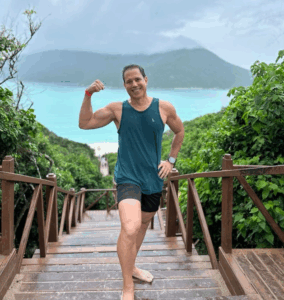
Peter’s philosophy is deceptively simple. He calls it environmental health—the idea that where you live either compounds your wellbeing or quietly degrades it. According to Peter, most Americans are fighting their environment every single day, using willpower to overcome systems designed to make them sick.
What Environmental Health Looks Like in Practice
During my stay, Peter showed me what it looks like when the environment works with you instead of against you.
Every day we walked—not for steps or metrics or some fitness goal, but just to be in the city. Rio is designed for pedestrians in a way American cities haven’t been for decades. The beachfront promenades stretch for miles, and the neighborhoods flow naturally into each other. Walking isn’t exercise here; it’s simply how you get around.
Additionally, Peter pointed out things I’d never noticed before. The food, for starters, looks different in Brazilian grocery stores. There are fewer aisles of packaged goods, more produce, more fish, and more food that actually looks like food.
In Brazil, ultra-processed food carries warning labels. Black octagons on the front of packages warn consumers about excessive sugar, sodium, and saturated fat—similar to how we label cigarettes. Essentially, the government treats junk food like the public health crisis it actually is.
Meanwhile, in America, we subsidize corn syrup and then wonder why everyone’s sick.
Peter’s Take on Brazilian vs. American Diets
Peter put it bluntly: “The traditional Brazilian diet is basically the new USA food pyramid—protein, vegetables, rice, beans, fresh fruit. It’s what American nutritionists now recommend after decades of getting it wrong.”
However, he was quick to add a caveat. “McDonald’s and KFC have made inroads here. The global processed food machine doesn’t respect borders. And even at sit-down restaurants, you still have to tell them: no extra salt, no extra sugar, no bread basket. The defaults are better than America, but you’re still on your own to make the right choices.”
Brazilian Food Culture: Why Health Is the Default
The açaí alone was worth the trip.
Americans know açaí as a $14 smoothie bowl at trendy wellness cafes—purple slush loaded with honey, granola, and enough sugar to spike your insulin into next week. Essentially, we’ve taken a genuine superfood and turned it into dessert.
In Rio, by contrast, açaí costs five dollars. It comes unsweetened, thick, and topped with fresh banana—no granola, no honey. Just the berry in its natural state, packed with anthocyanins and antioxidants.
The Philosophy Behind Real Food
The difference isn’t just nutritional; it’s philosophical. In America, health food is a premium product marketed to people wealthy enough to afford it. In Brazil, however, real food is just food. It’s the default, not the upgrade.
Peter walked me through his typical day in Rio. Morning açaí comes first, followed by fresh fish for lunch—pulled off a boat that morning, not frozen and shipped from the other side of the planet. Dinner is at a local restaurant where a full meal costs twenty dollars and consists of grilled protein, rice, beans, and vegetables.
Remarkably, none of it felt restrictive or like dieting. Instead, it felt like eating the way humans are supposed to eat, in a place that hasn’t optimized every calorie for shelf life and profit margin.
Furthermore, the fruit tastes like fruit here. That sounds obvious until you realize how rarely it’s true in America, where produce is engineered for transport—bred to survive three thousand miles in a refrigerated truck rather than to deliver nutrition or flavor. In Rio, the mangoes taste like mangoes and the papayas taste like papayas. Food hasn’t been turned into a logistics problem yet.
Wellness Principles That Work in Any Environment
Over dinner one night—grilled fish, black beans, farofa, and fresh lime—Peter laid out the fundamentals he’s built his practice around. It’s simple stuff, but the kind of simple that gets ignored precisely because it doesn’t require a subscription or a device.
“Increase strength and health through better food choices,” he said. “That’s it. That’s the foundation. Everything else is optimization on top of a broken base if you’re not eating real food.”
The Potassium-Sodium Balance
In particular, he’s focused on what he calls the potassium-sodium exchange—balancing the body’s electrolyte ratio through whole foods rather than supplements. Most Americans are sodium-dominant from processed food consumption, which creates inflammation, water retention, and cardiovascular stress. Consequently, eating potassium-rich whole foods—bananas, avocados, leafy greens, beans—helps restore the balance.
“In Brazil, this happens naturally if you eat traditionally,” Peter explained. “Rice and beans, fresh fruit, vegetables at every meal. The diet self-corrects what Americans are trying to fix with pills and powders.”
The Case Against Microwaves
His most controversial stance involves the microwave. “If you microwave water and then water plants with it, you can watch them die,” he told me. “So what do you think microwaved water is doing inside your body? I haven’t used a microwave in fifteen years.”
Admittedly, I couldn’t verify the plant claim on the spot. However, I noticed something interesting during my two weeks in Rio: I never saw a microwave—not in my Airbnb, not in the restaurants. Food was prepared fresh, heated on stoves, and served immediately. The entire concept of nuking leftovers barely exists here.
Whether or not Peter’s microwave theory holds up to peer review, the broader point landed: convenience culture comes with costs we don’t fully understand. Sometimes the old ways persist simply because they work.
The Brazil vs. America Lifestyle Gap
Peter’s approach to wellness isn’t about protocols or supplements or optimization. Instead, it’s about defaults.
The American default is desk, car, delivery app, screen, repeat. We’ve engineered movement out of daily life and then sell gym memberships to compensate. Similarly, we’ve eliminated casual social interaction and then prescribe therapy to address the loneliness epidemic. Additionally, we’ve flooded our food supply with processed garbage and then spend billions treating the chronic diseases that result.
Compare that to the Hamptons executive wellness scene—premium services layered on top of fundamentally unchanged lifestyle patterns. You can spend $50,000 a year on longevity interventions while still sitting in traffic, eating convenience food, and staring at screens sixteen hours a day.
How Brazilian Defaults Differ
The Brazilian default, however, is fundamentally different.
People walk. They gather on beaches and in parks. They sit at outdoor cafes and talk to each other. Vitamin D isn’t a supplement here—it’s just Tuesday. Likewise, social connection isn’t something you schedule between meetings; it’s the texture of daily life.
Peter calls these environmental nudges. Essentially, a well-designed city nudges you toward health by making walking easier than driving, socializing easier than isolating, and real food more accessible than processed food.
Rio is full of such nudges. The beach culture gets people outdoors and moving, the café culture keeps people connected, and the food culture keeps people nourished. As a result, you don’t have to be disciplined to be healthy here—you just have to participate in normal life.
Consider this: we spend $4.3 trillion a year on healthcare—more than any other nation on earth—and much of it goes toward treating conditions that healthier environments would prevent in the first place.
The Health-Conscious Culture of Rio de Janeiro
What surprised me most wasn’t the food or the lifestyle. Rather, it was the people.
Rio is full of humans who prioritize vitality as a baseline, not a luxury purchase. They’re fit, health-conscious, and present. You see it on the beaches, in the cafes, and walking the promenades—bodies that move, faces that make eye contact, energy that’s available rather than depleted.
Importantly, that energy is contagious.

Ambient Wellness vs. Performative Wellness
In the United States, wellness often feels performative—something you post about rather than practice. In Rio, by contrast, it’s ambient. It’s just how people live. The city doesn’t reward optimization theater; instead, it rewards showing up, being present, and participating in life as it’s happening.
As a result, I didn’t just recover from dental surgery in Rio. I recovered surrounded by people who made me want to move, eat well, and stay sharp. The environment didn’t just support my healing—it actively accelerated it.
Peter has a theory about this. He believes humans are environmental animals more than we’re willing to admit. We absorb the energy of our surroundings and rise or fall to the standards around us. If you put yourself in a context where vitality is normal, vitality becomes easier to maintain. Conversely, if you put yourself in a context where exhaustion is normalized, you’ll find yourself exhausted.
Simply put: Rio made health feel obvious, while America makes health feel like a second job.
Why Environment Matters More Than Optimization
Americans talk about optimization like it’s a personal discipline problem. We think if we just find the right morning routine, the right supplements, or the right workout protocol, we’ll unlock peak performance. The Tim Ferriss approach to life hacking has spawned an entire industry of tactical interventions.
Peter, however, showed me a different framework. He doesn’t optimize behaviors; he optimizes context.
The Leverage of Environment
The right environment makes good choices easy and bad choices hard. Conversely, the wrong environment does the opposite. Most Americans are playing the game on hard mode—using willpower to overcome systems actively working against them—and then blaming themselves when they fall short.
So what if the smarter move isn’t more discipline? What if it’s better positioning?
This is how I’ve started thinking about the Rio trip. Yes, I saved $60,000 on dental work, and yes, I got my smile back. But the deeper insight was strategic: environment is leverage.
The same person, in a different context, gets different results—not because they changed who they are, but because they changed where they are. The context does half the work.
This principle applies to health. It also applies to business, relationships, and every domain where performance matters.
We spend enormous energy trying to change ourselves, yet we spend almost no energy auditing the environments that shape us. That’s a strategic error.
The Bottom Line on Rio de Janeiro Dental Tourism
Tomorrow the stitches come out. Then I fly back to New York with healing implants, a lighter financial footprint, and my confidence fully restored.
Six months from now, I’ll return to Rio for the permanent teeth at Sorrio Dental. However, I suspect I’ll also be returning for something less tangible and far more valuable: the reminder that context compounds.
The Real Return on Investment
The smile was the excuse, and the savings were significant. But the real ROI was understanding why environment is the most underrated variable in the performance equation.
I’m not suggesting everyone should move to Brazil. Instead, I’m suggesting everyone should audit the environments they’ve accepted by default. What is your context actually costing you—in money, in health, in energy, in confidence? What would it mean to discover that a different setting changes the equation entirely?
Ultimately, you don’t have to relocate permanently or renounce anything. You just have to be willing to test the assumptions you’ve been operating under.
Dental tourism was the excuse. Rio was the revelation. And being back in the winner’s circle was the real dividend.
Peter was right: the best optimization isn’t a hack. It’s choosing an environment that makes excellence easy instead of heroic.
I saved $60,000 on dental work. But the real takeaway was understanding why that gap exists in the first place—and what it reveals about the larger gap between the results Americans accept and the results that are actually possible.
Context is strategy. Choose accordingly.
The author is a New York–based entrepreneur and publisher. Peter Louis is a health and wellness coach specializing in environmental approaches to vitality and peak performance.
Frequently Asked Questions About Rio de Janeiro Dental Tourism
How much can you save with dental tourism in Rio de Janeiro?
Based on my experience, I paid $9,500 in Rio versus the $70,000-$80,000 quoted in New York for the same procedures—six implants with bone grafts, one root canal, and nine fillings. That’s approximately $60,000 in savings, or roughly 85% less than comparable U.S. pricing.
Is dental work in Brazil the same quality as the United States?
At Sorrio Dental, I received the same imaging technology, same materials, and same treatment protocols I would have received at top practices in New York. Moreover, the diagnosis matched exactly what three Long Island dentists had told me. However, quality depends on the practice you choose—therefore, do your research and prioritize clinics with clear communication and verifiable credentials.
How long should I plan to stay in Rio for dental implants?
I stayed thirteen days in total. My schedule included implants and bone grafts on day one, fillings the following week, root canal mid-week, and the crown the following Monday. Additionally, you’ll need to return in approximately six months for permanent teeth after the implants heal.
What’s the best area to stay for dental tourism in Rio de Janeiro?
I stayed in Copacabana, two blocks from Sorrio Dental. The neighborhood offers easy beach access, excellent restaurants, and walkable streets—all of which are ideal for recovery. Currently, Airbnb rentals run approximately $950 for two weeks.
How do I find a reputable dentist in Rio de Janeiro?
I contacted five practices via WhatsApp and evaluated their responses. Specifically, look for fluent English communication, prompt replies, clear treatment plans, and willingness to review your existing imaging. Sorrio Dental stood out because their professional communication matched any premium American practice.
Related Articles
- Miami Biohacking Scene (2026): South Florida’s Wellness Tech Hub
- Manhattan Longevity Clinics (2026): NYC’s Premier Healthspan Practices
- Hamptons Executive Wellness Guide (2026): Premium Health Services for the East End
- Tim Ferriss Net Worth (2026): How the 4-Hour Author Built a $100 Million Empire
- Biohacker & Wellness Founder Net Worth Rankings (2026)