
The Women Who Owned Your Living Room
Before Instagram influencers existed, before YouTube fitness channels, before Peloton IPO’d at $8 billion—there was the living room. And five fitness icons turned America’s shag carpeting into a $500 million empire, one high-kick at a time.
The aerobics boom of the 1980s wasn’t just a fitness movement. It was the original direct-to-consumer revolution. These pioneers understood something Silicon Valley would spend decades rediscovering: the best business model is owning the relationship with your customer.
Today, we break down exactly how aerobics built fortunes that still echo through modern fitness. The playbook they wrote is the same one Kayla Itsines, Chloe Ting, and every fitness app founder follows today.
The Architects of an Industry: Why VHS Changed Everything
In 1982, the fitness industry barely existed as we know it. Gyms were dark basements for bodybuilders. Jogging was considered eccentric. Then came a technological breakthrough that would mint millionaires: the home VCR.
According to Statista’s historical data, VCR penetration in American households exploded from 1.1% in 1980 to over 70% by 1990. Suddenly, every living room became a potential gym.
The Perfect Storm of Demographics
Three forces collided simultaneously. Women were entering the workforce in unprecedented numbers and needed time-efficient fitness solutions. Health consciousness was rising after the jogging boom of the 1970s. Additionally, home entertainment technology finally made on-demand content possible.
The entrepreneurs who recognized this convergence built empires. Those who dismissed VHS as a fad missed the wealth transfer of a generation.
The Original Subscription Model
Consider the genius of the VHS fitness model. One tape could be used hundreds of times. Yet consumers kept buying new releases. Why? These fitness queens understood the psychology of progression. They created series, sequels, and specialized programs. Each purchase felt like an investment in self-improvement, not just entertainment.
The Pioneers Who Saw It First (1982-1990)
Jane Fonda didn’t invent aerobics. However, she invented the aerobics business. Her 1982 “Jane Fonda’s Workout” became the best-selling VHS tape of all time, moving 17 million copies at roughly $20 each.
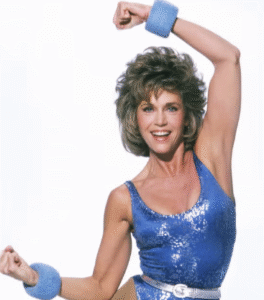
Do the math. That’s $340 million in gross revenue from a single product. Before manufacturing, distribution, and retail cuts, Fonda’s company captured margins that would make today’s SaaS founders weep.
Richard Simmons: The Parasocial Pioneer
While Fonda sold aspiration, Richard Simmons sold belonging. His “Sweatin’ to the Oldies” franchise moved over 20 million units by targeting a demographic the fitness industry ignored: overweight Americans who felt alienated by traditional gyms.
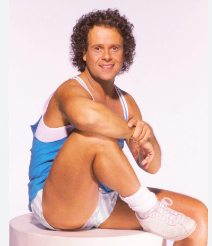
Simmons pioneered what we’d now call “community building.” He answered fan mail personally, made house calls, and created a parasocial bond so powerful that followers became evangelists. Modern creators spend millions trying to manufacture what Simmons generated through genuine connection.
The Licensing Expansion
These pioneers understood that video was just the entry point. Jane Fonda launched workout studios bearing her name. Simmons developed a food delivery service called “Deal-A-Meal.” Both expanded into books, apparel, and speaking circuits. The VHS was customer acquisition. The real revenue came from the ecosystem.
The Golden Era: Peak VHS Dominance (1990-2000)
By the early 1990s, the playbook was proven. A new generation of fitness entrepreneurs scaled it to unprecedented heights. Denise Austin, Suzanne Somers, and Susan Powter each carved distinct niches worth hundreds of millions combined.
Denise Austin’s Longevity Play
Austin’s strategy differed from the early pioneers. Rather than one blockbuster, she pursued volume. Over 100 workout videos. Daily TV appearances on ESPN and Lifetime. A relentless consistency that built trust over decades.

This approach generated an estimated $10 million net worth that continues growing. While others flamed out, Austin’s steady presence made her the fitness industry’s compound interest play.
Suzanne Somers: The Pivot Queen
Somers proved that fitness fame was portable. After her ThighMaster infomercial became cultural phenomenon—moving over $100 million in product—she pivoted into supplements, bioidentical hormones, and wellness publishing.
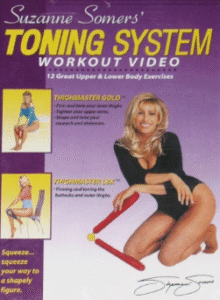
Her estimated $100 million fortune came from recognizing a crucial insight: the same audience that bought fitness products would buy health products. The customer relationship, not the specific product, was the asset.
Susan Powter’s Cautionary Tale
Not every fortune endured. Susan Powter’s “Stop the Insanity” empire peaked at an estimated $50 million in the early 1990s. Her signature look and confrontational style generated massive awareness. Nevertheless, she failed to build the systems that would sustain her business through market changes.
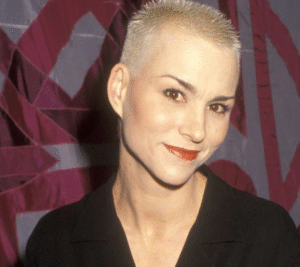
Within a decade, bankruptcy followed. Powter’s rise and fall offers the clearest lesson from the VHS era: attention without infrastructure creates wealth without durability.
Revenue Model Analysis: The VHS Fitness Formula
Understanding how aerobics built fortunes requires examining the economics. These weren’t lucky celebrities. They were sophisticated entrepreneurs who understood unit economics before the term existed.
The Margin Magic
A VHS workout tape retailed for $15-30. Manufacturing costs ran $2-4 per unit. Distribution and retail took 40-50%. Still, that left $5-10 in pure profit per tape sold. At millions of units, the math was extraordinary.
Compare this to modern fitness apps. IHRSA research shows customer acquisition costs for digital fitness now run $30-100. The VHS queens acquired customers for free through TV appearances and retail placement.
The Recurring Revenue Illusion
VHS sales weren’t technically recurring revenue. However, the queens engineered psychological recurrence. Seasonal releases, difficulty progressions, and body-part-specific programs created ongoing purchase motivation.
Jane Fonda released 23 workout videos over 13 years. Each built on brand loyalty established by the previous release. The result? Lifetime customer values that rivaled modern subscription models.
The Licensing Multiplier
Beyond direct sales, VHS success unlocked licensing opportunities impossible to quantify precisely. Workout apparel. Footwear endorsements. Book deals. Speaking fees. Studio partnerships.
Richard Simmons reportedly earned $200,000 per speaking appearance at his peak. Multiply that across a year of bookings, and the VHS revenue becomes almost secondary to the opportunities it created.
Combined Net Worth Comparison: The VHS Queens Ranked
What did this era of aerobics fortunes actually produce in lasting wealth? Here’s the definitive ranking based on peak and current estimated net worth.
The Leaderboard
Jane Fonda: Peak net worth $200 million, current estimate $200 million. Her wealth proved durable through Hollywood earnings, continued video releases, and strategic investments.
Suzanne Somers: Peak net worth $100 million at time of death in 2023. Built diversified revenue streams across fitness, supplements, and publishing that sustained wealth across four decades.
Richard Simmons: Peak net worth $15 million, estate value at death in 2024 estimated at $10 million. Despite massive sales volume, Simmons prioritized mission over monetization, investing heavily in charitable causes.
Denise Austin: Current estimated net worth $10 million. Slower wealth accumulation, but remarkable longevity with ongoing revenue streams from YouTube and licensing.
Susan Powter: Peak net worth $50 million, current estimate under $1 million. The cautionary tale that proves timing and exit strategy matter as much as peak success.
Lessons for Today’s Fitness Entrepreneurs
The VHS era offers a masterclass for anyone building in fitness today. These principles transcend technology.
Own Your Distribution
The queens succeeded because they controlled their relationship with customers. They didn’t rent audiences from platforms. They built owned channels through TV relationships, retail partnerships, and direct response.
Today’s equivalent: email lists, owned apps, and direct-to-consumer sales. The entrepreneurs depending entirely on Instagram or YouTube are making the same mistake as fitness brands that relied entirely on retail in 2010.
Build Ecosystems, Not Products
Every VHS fortune that endured did so through diversification. Fonda built studios. Somers built supplement lines. Simmons built community programs. The video was never the business. It was the customer acquisition engine for the real business.
Understand Your Real Customer
Each successful queen identified an underserved segment. Fonda spoke to professional women. Simmons reached the overweight and overlooked. Austin captured the time-starved mom. Specificity created loyalty.
Today’s fitness market is more fragmented than ever. The opportunity lies in serving specific communities exceptionally well, not in competing for general audiences.
The Legacy Lives On
The story of how aerobics built fortunes is really the story of how entrepreneurship works. Identify a technological shift. Understand the human psychology it enables. Build systems to capture value. Diversify before the window closes.
Jane Fonda is 87 years old. She still releases workout content. Denise Austin publishes daily to YouTube. The game changed, but the players who understood the fundamentals adapted and survived.
The next generation of fitness fortunes is being built right now, probably in someone’s spare bedroom, by someone who understands what the VHS queens understood: the best time to build a fitness empire is always right now, using whatever technology exists today.
Read More Fitness Legend Profiles
→ Bodybuilding Billionaires: How Muscle Built Media Empires
Compare Net Worth: Then vs. Now
→ Jane Fonda vs. Kayla Itsines: VHS Queen vs. App Queen
Celebrity Wellness Profiles
→ Tim Ferriss Net Worth: The Podcast Empire
→ Dr. Berg Net Worth: YouTube’s Keto King
Related Articles
→ Richard Simmons Net Worth & Legacy
→ Susan Powter Net Worth & Bankruptcy: The $50M Cautionary Tale